
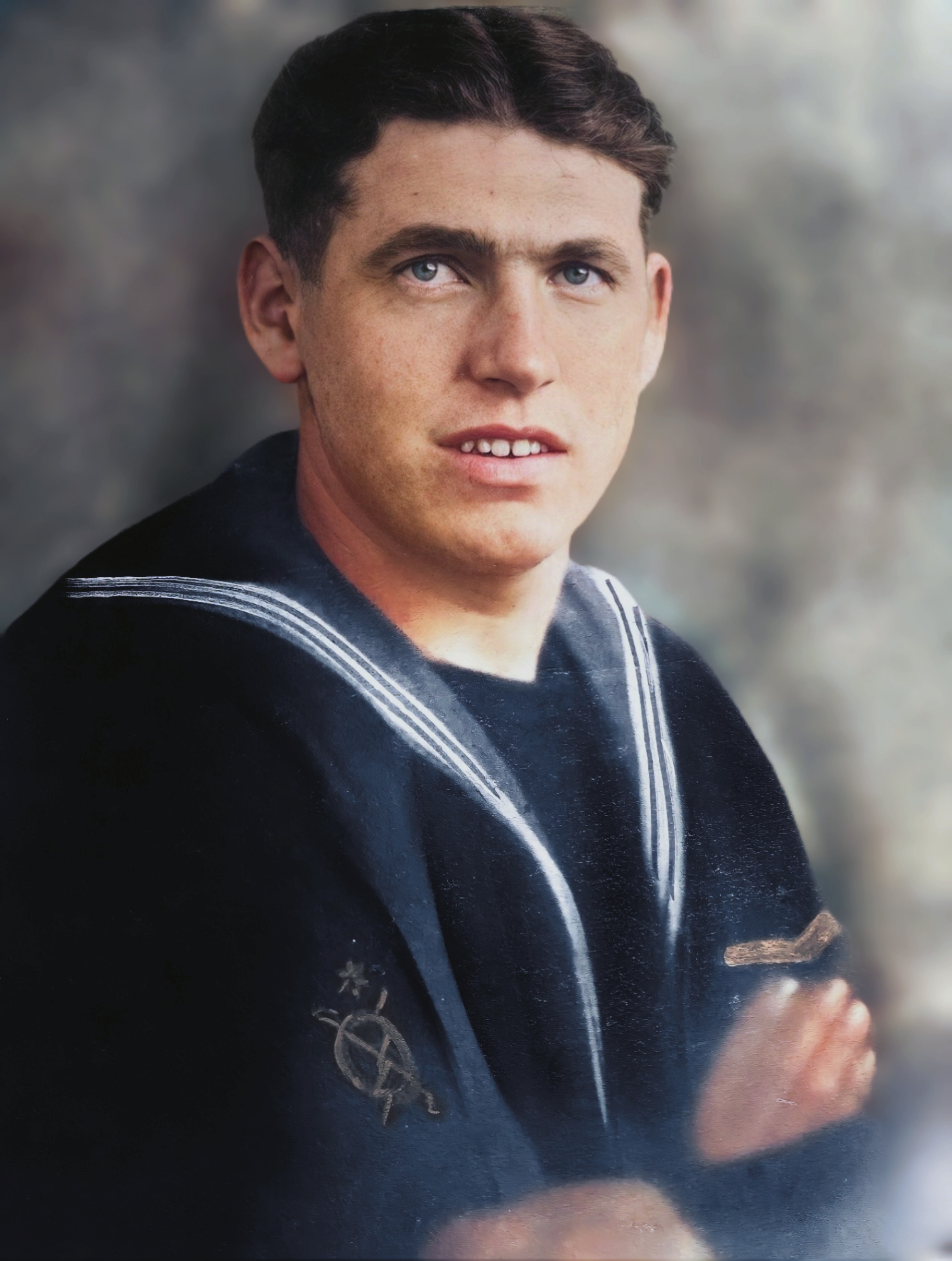
John Prinsen was born on 6th May 1920 in Toxteth, Liverpool. He was the youngest of two children; his brother, Henry, born in 1918, passed away in 1919.
His father, Henry John Prinsen, born in Amsterdam around 1893, served at sea during the First World War as part of the British Mercantile Marine (later known as the Merchant Navy). Records indicate that Henry died at some point in 1919, with his death registered in the district of Toxteth.
His mother, Margaret Callaghan, was born in Liverpool on 17th July 1893, and was baptised 5 days later at St Patrick’s Church. She and Henry were married in 1918 at St Thomas’ Church on Park Lane, and resided at 97 Warwick Street, Toxteth. Margaret passed away in Knowlsey in March 1981.
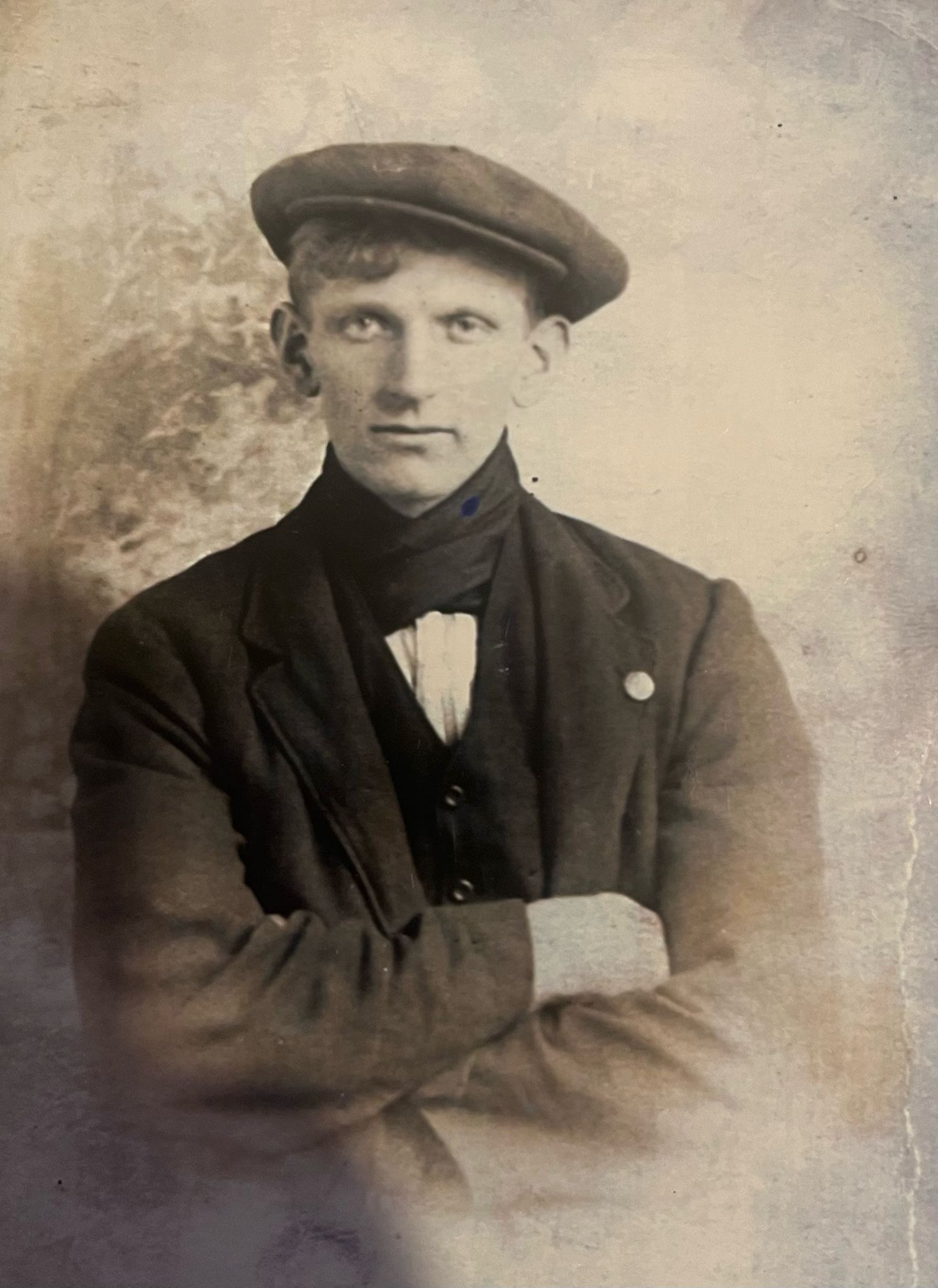
Left Image: Henry John Prinsen
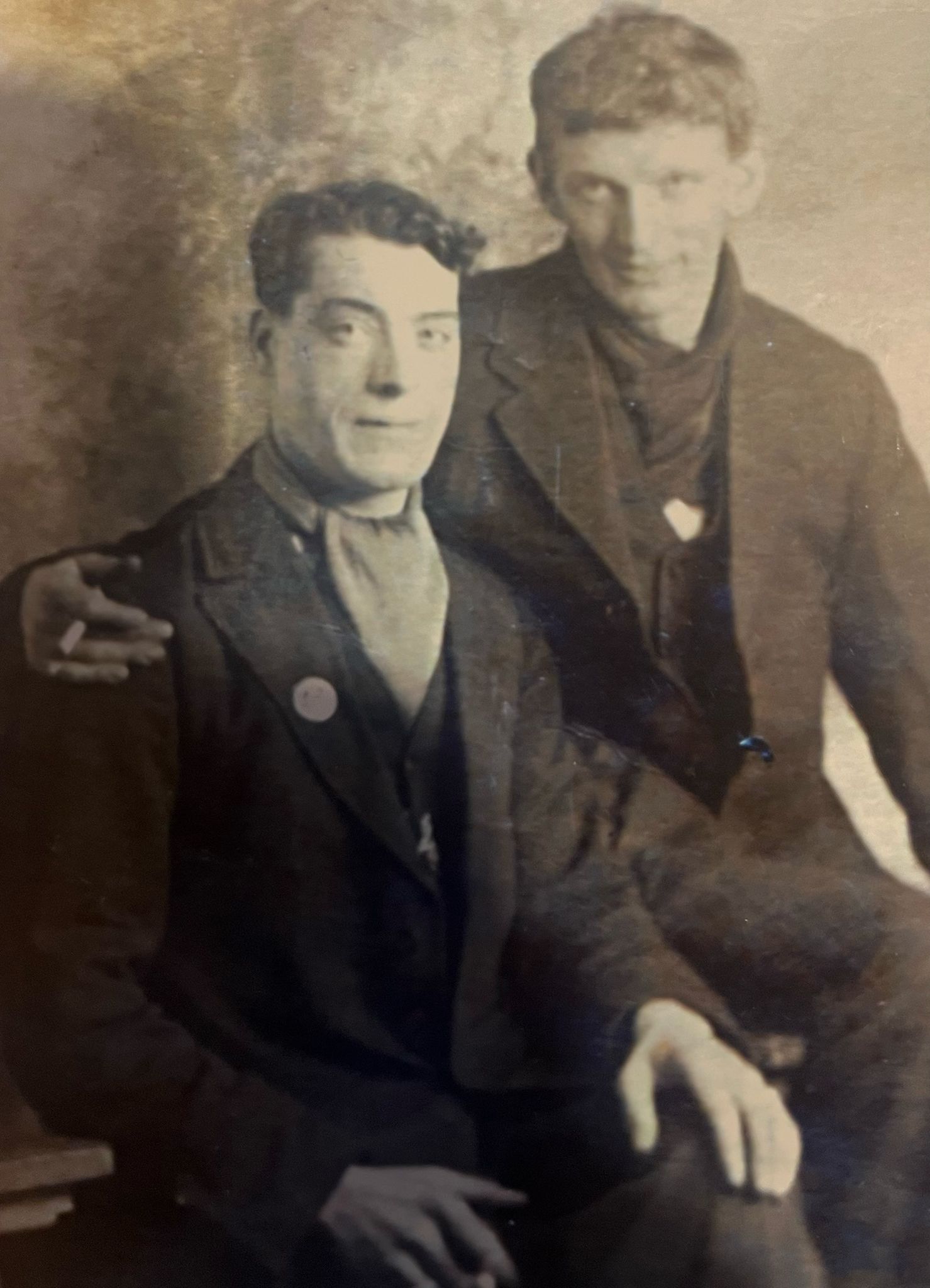
Right Image: Christopher Callaghan (Margaret’s brother) and Henry John Prinsen
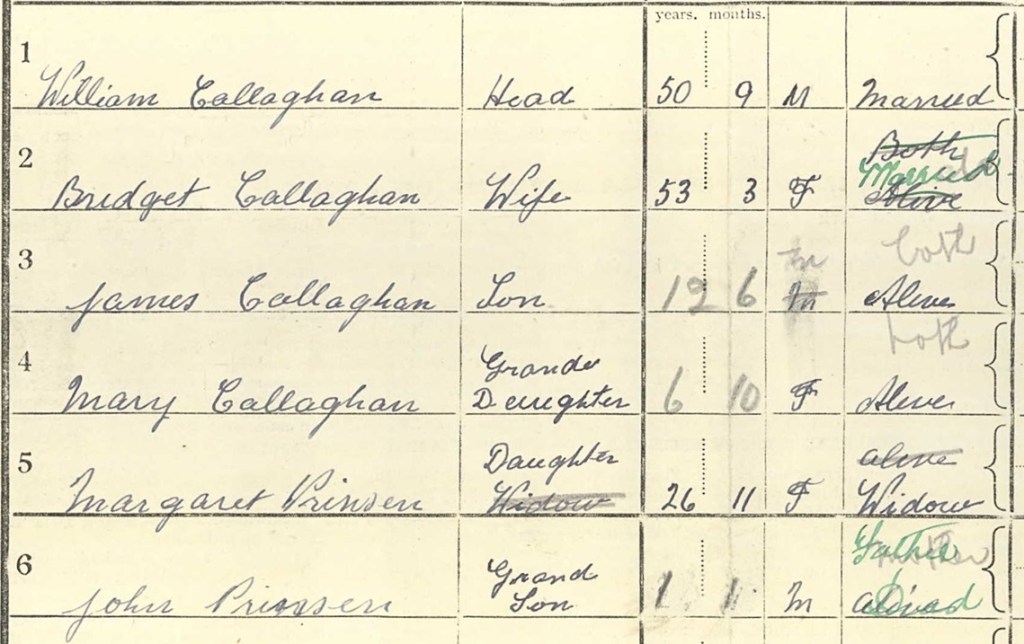
At the time of the 1921 Census, John, 1 year and 1 month old, is registered as living with his mother and her family at 149 Wolfe St, Toxteth.
In January 1942, at the age of 21, John married Catherine Wilcott, 20, also from the Toxteth area. The couple had one child together, a daughter also named Catherine, who was born on 16th December 1942. An edition of the Liverpool Evening Express, published in December 1944, lists John’s address as having been 118a Upper-Mann Street, Toxteth, and states he had been a pupil at St Malachy’s school.

The Second World War
It has been difficult to find concrete evidence relating to John’s occupation in the lead up to the Second World War. However, by 1943 he was serving as part of the Royal Navy as an able seaman aboard the H.M.S. Charbydis. A Dido-class cruiser, Charybdis was originally built to fulfil an anti-aircraft role, and was named after the sea monster of Greek mythology. Construction on the ship began in November 1939 at Cammell Laird yards, Birkenhead, with her being launched and completed for service just over two years later, on 3rd December 1941.
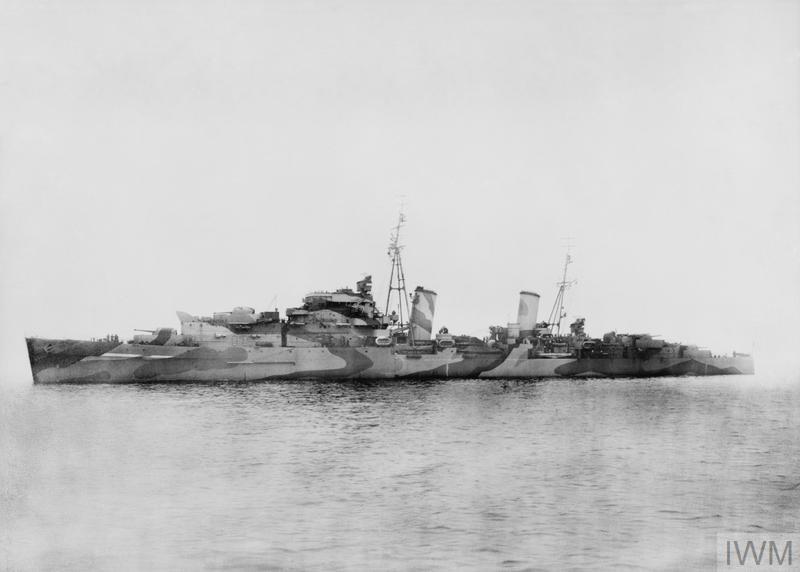
Charybdis played a significant role in several operations, including convoy protection in the Atlantic and Mediterranean, as well as participating in Operation Torch in November 1942, the Allied invasion of North Africa. In 1943, she was assigned to support Operation Tunnel, a series of missions aimed at intercepting German blockade runners off the coast of France.
As an able seaman aboard Charybdis, John would have been a skilled member of the ship’s crew, with at least two-years’ experience at sea. He would have been responsible for a variety of essential duties to ensure the smooth operation of the vessel. These duties typically included handling ropes and anchors, steering the ship under supervision, standing watch to keep lookout for enemy ships or aircraft, maintaining the ship’s cleanliness and seaworthiness, and assisting with the operation and maintenance of weaponry such as anti-aircraft guns. In combat situations, able seamen were also expected to man battle stations, carry out damage control, and support officers with navigation or signaling tasks. Their role was vital to both daily operations and survival during engagements.
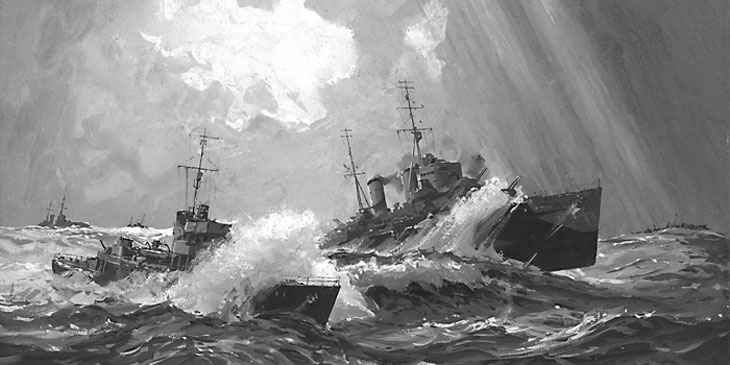
On the night of October 22nd/23rd 1943, Charybdis was leading a Royal Navy force as part of Operation Tunnel, attempting to intercept the German blockade runner Münsterland, off the coast of Brittany, North-Western France. While patrolling near the Channel Islands, German torpedo boats of the 4th Torpedo Boat Flotilla detected the British ships.
Taking advantage of surprise and radar limitations, the German boats launched a coordinated torpedo attack. Charybdis was struck by at least one torpedo, causing a catastrophic explosion and rapid flooding. She sank quickly, with the loss of 464 of her crew. Only 107 survived, rescued by accompanying British ships. Some bodies later washed ashore in the Channel Islands, where local residents gave them respectful burials.
John Prinsen was among the 464 crew members who lost their lives during the sinking of Charybdis. His body was never recovered, and he is commemorated on the Plymouth Naval Memorial.



Plymouth Naval Memorial
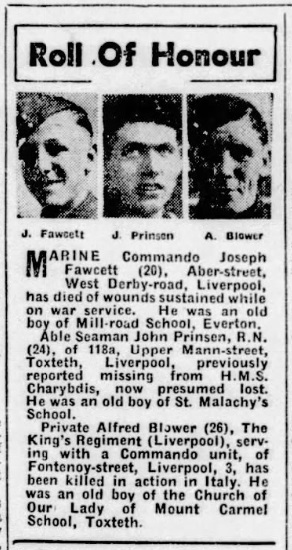
8th December 1944
 Last Posts